English Publications
Selected publications in English
Selected publications in English






English News / Highlights
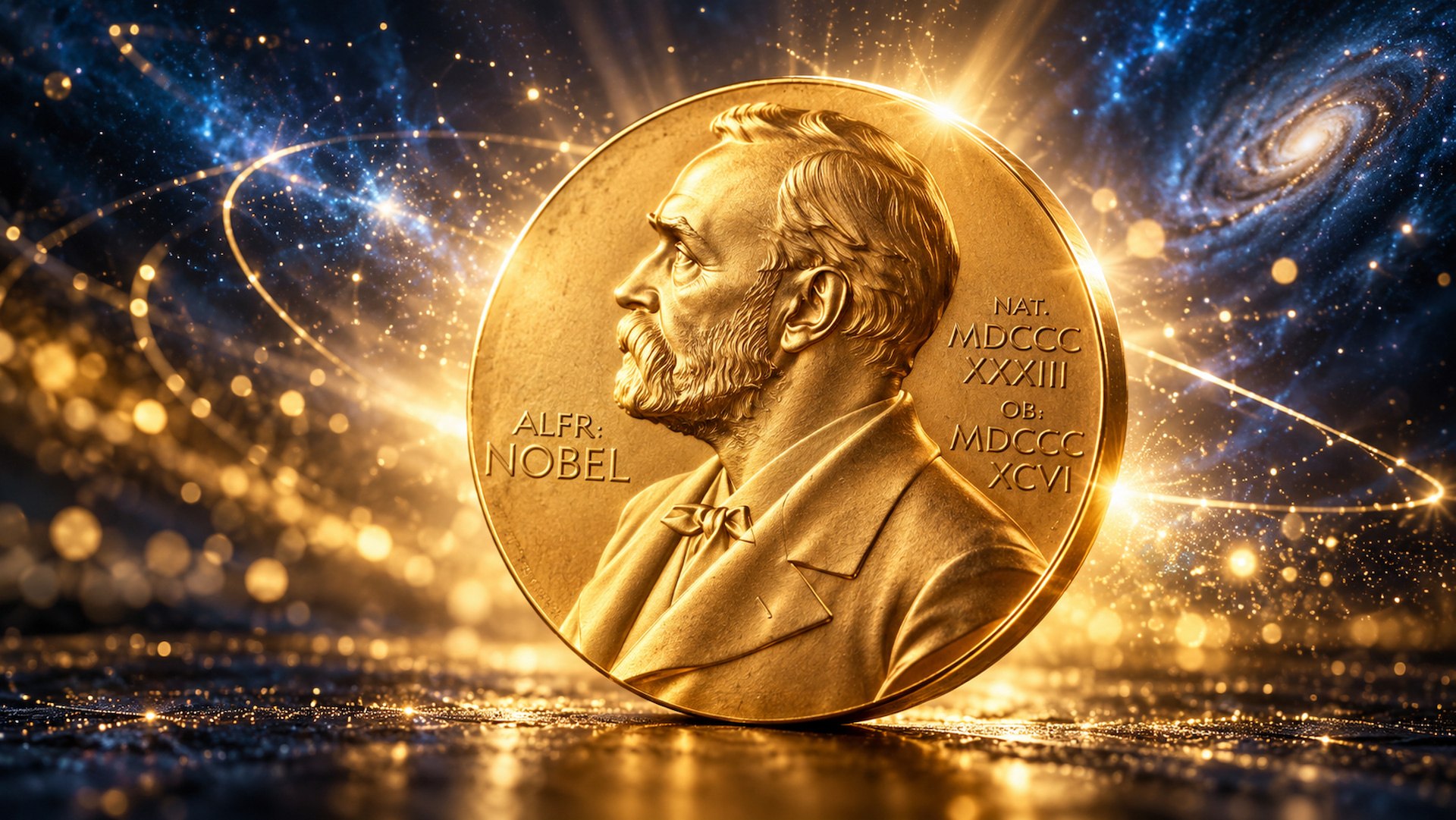
The World Applauds. We Can Already Hear the Next Symphony.
A message of congratulations from Holger‑Thorsten Schubart, on behalf of every member of staff, the entire Scientific Advisory Board, and the research community of the Neutrino Energy Group. There are days when a scientific achievement is honoured—and an entire field of research shines more brightly in humanity’s consciousness. Today is one of those days. On behalf of our entire community, I warmly congratulate Francis Halzen on receiving the 2026 Nobel Prize in Physics. This extraordinary honour recognises his decisive contributions to the IceCube Neutrino Observatory and the discovery of high-energy neutrinos of astrophysical origin.
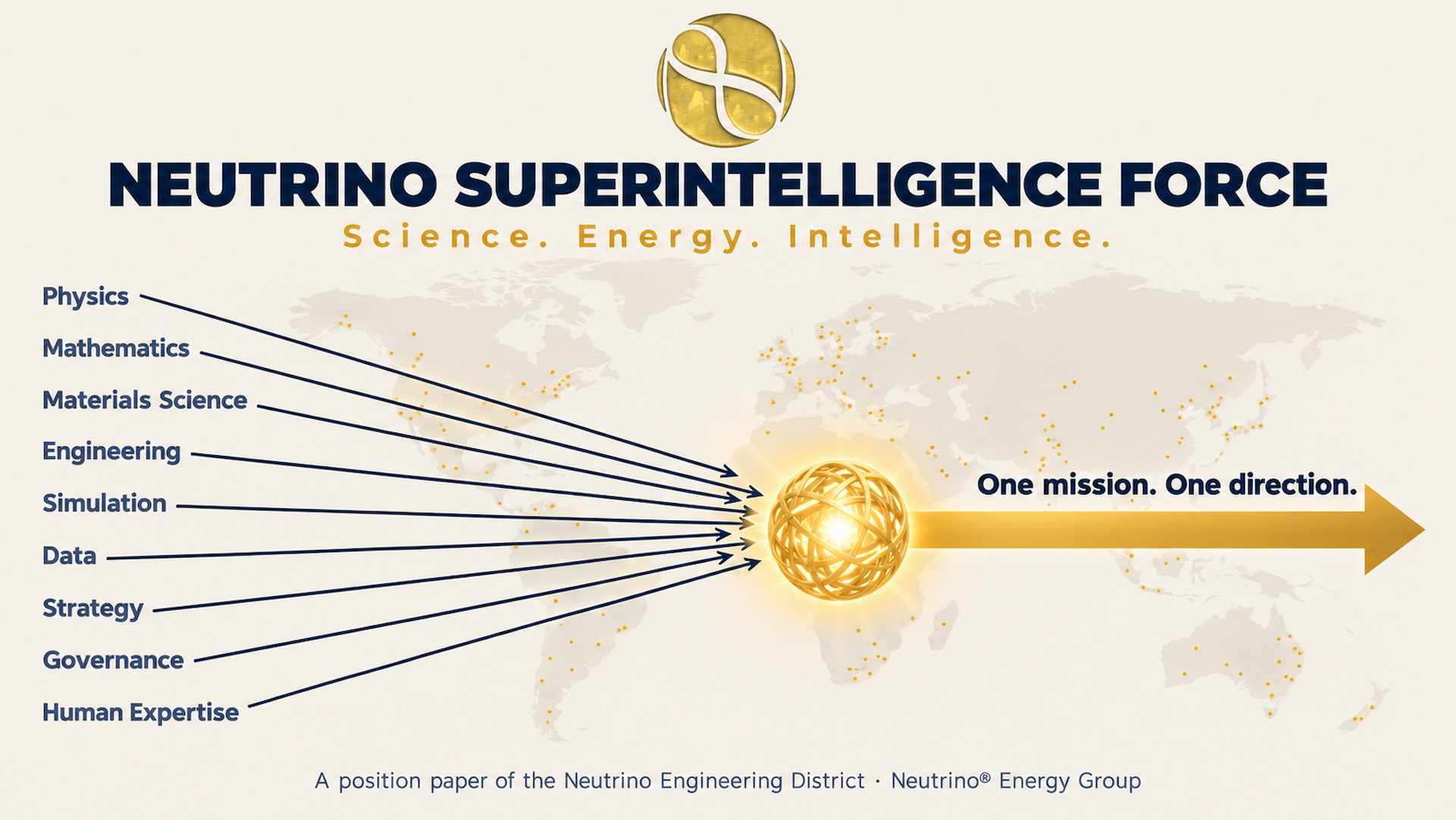
Neutrino Superintelligence Force
What earns intelligence the word “super”? Not a machine that claims to know everything, but an architecture in which human expertise, specialised AI, mathematics, simulation and measurement challenge and reinforce one another. The Neutrino Superintelligence Force proposes exactly that definition: many intelligences, one human-defined mission, built-in opposition, and a four-gate test of mathematical consistency, experimental proof, independent reproducibility and technical feasibility. People remain responsible. Reality gets the final vote.

The Scattering Is Elastic. Let’s See if the Worldview Can Keep Up.
CLOUD. TAO. DANSS. Sounds like a festival lineup. It is actually a set of reactor experiments whose potential is examined in a study published in Physical Review D: what can neutrino–electron scattering reveal about the limits of the Standard Model?
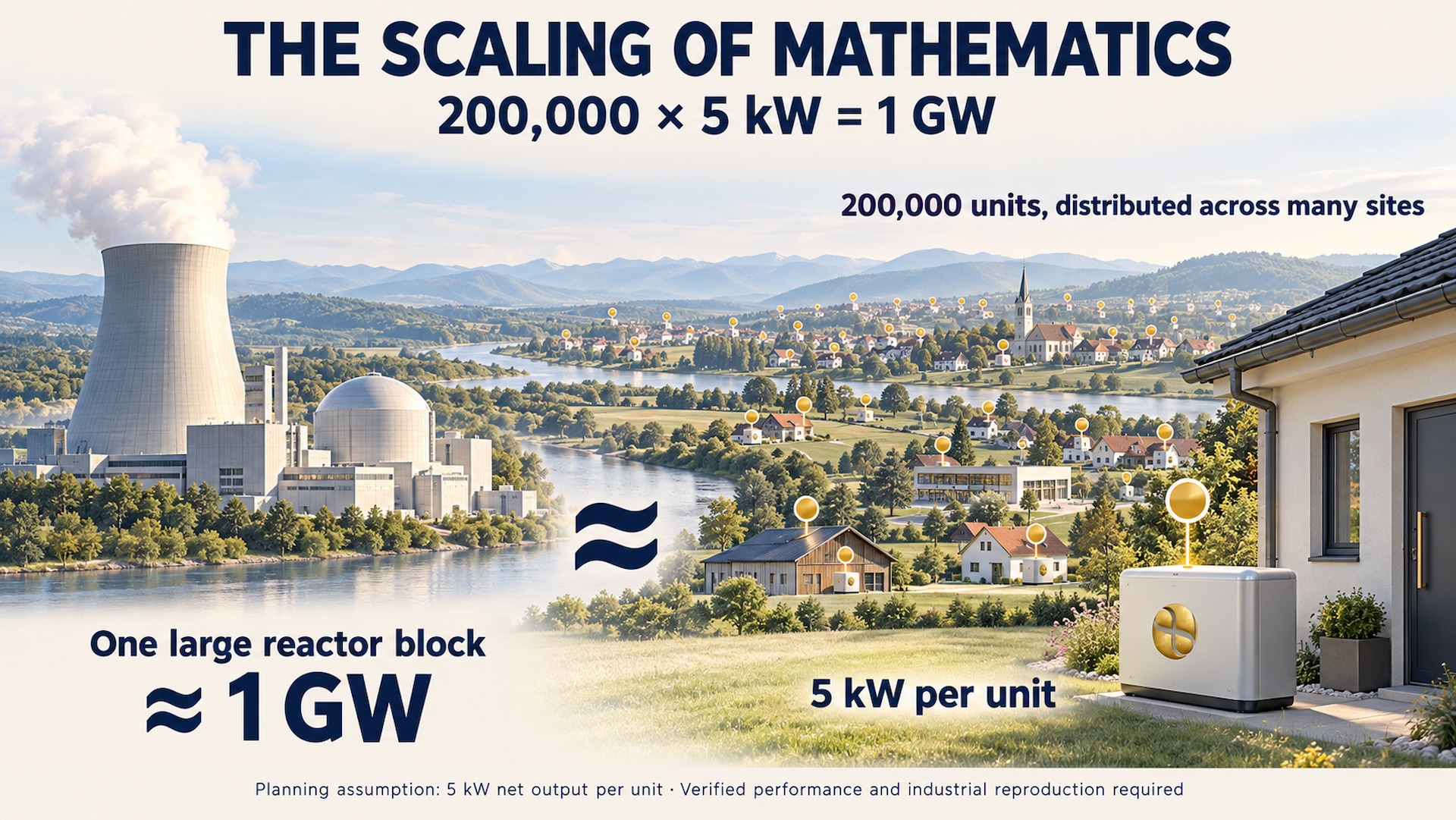
The Scaling of Mathematics
There is knowledge our fathers leave us. And there are questions that remain long after their voices have fallen silent. On October 1, my father would have celebrated his birthday. As I worked on this article, the memory of him felt especially close.

3,500 Metres Beneath the Sea. A Vision That Refuses to Stay in the Dark.
No sunlight. Deep darkness. And still, neutrinos arrive. Some 3,500 metres beneath the Mediterranean, the ARCA neutrino telescope records the measurable traces of their interactions. With twelve additional detection units and 62 in total, the international KM3NeT collaboration is expanding its view of the most energetic processes in the universe.
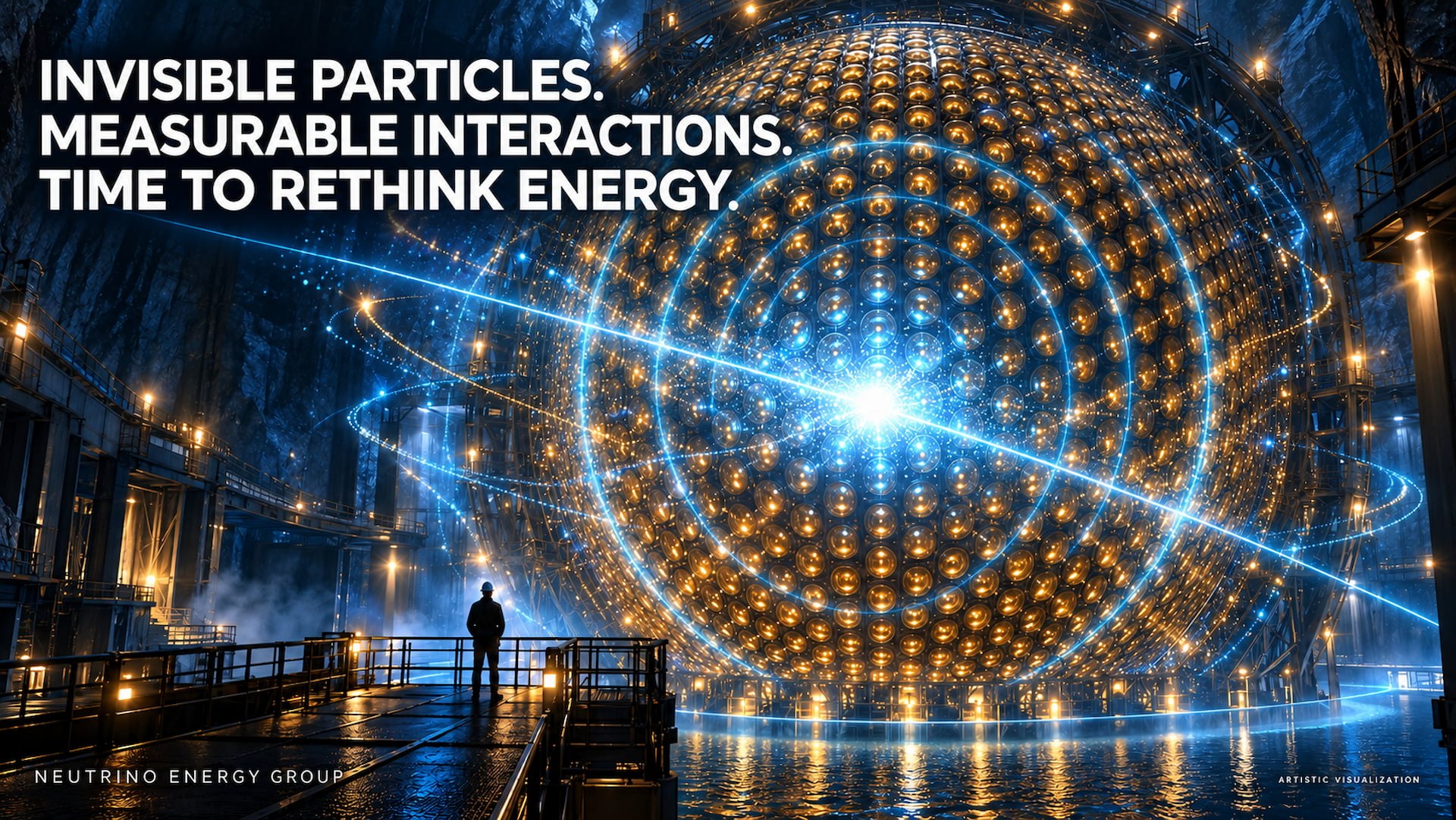
Neutrino Research: The Measurements Get Sharper. Some Opinions Apparently Don’t.
Anyone still confusing “invisible” with “irrelevant” has fresh numbers from China to consider. In a new preprint, the JUNO collaboration reports approximately one-percent precision for a key neutrino mass-splitting parameter, based on more than 8,000 event candidates recorded over roughly 207 days.
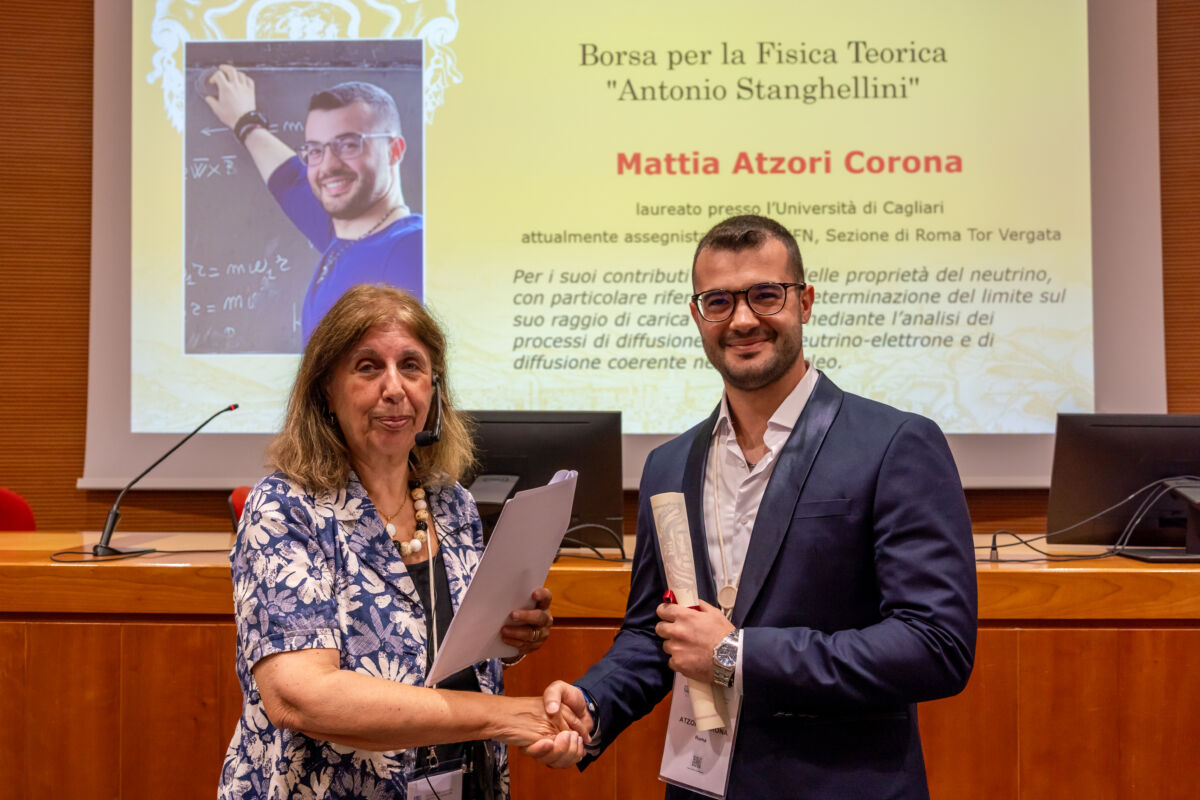
Italian Neutrino Research Connects CEνNS, Dark Matter and Fundamental Physics
The University of Cagliari is celebrating two national awards for young researcher Mattia Atzori Corona, including work on the phenomenology of neutrino interactions for coherent neutrino-nucleus scattering (CEνNS) and dark matter experiments. Holger Thorsten Schubart on why more and more pieces of the neutrino puzzle keep landing on the same table.
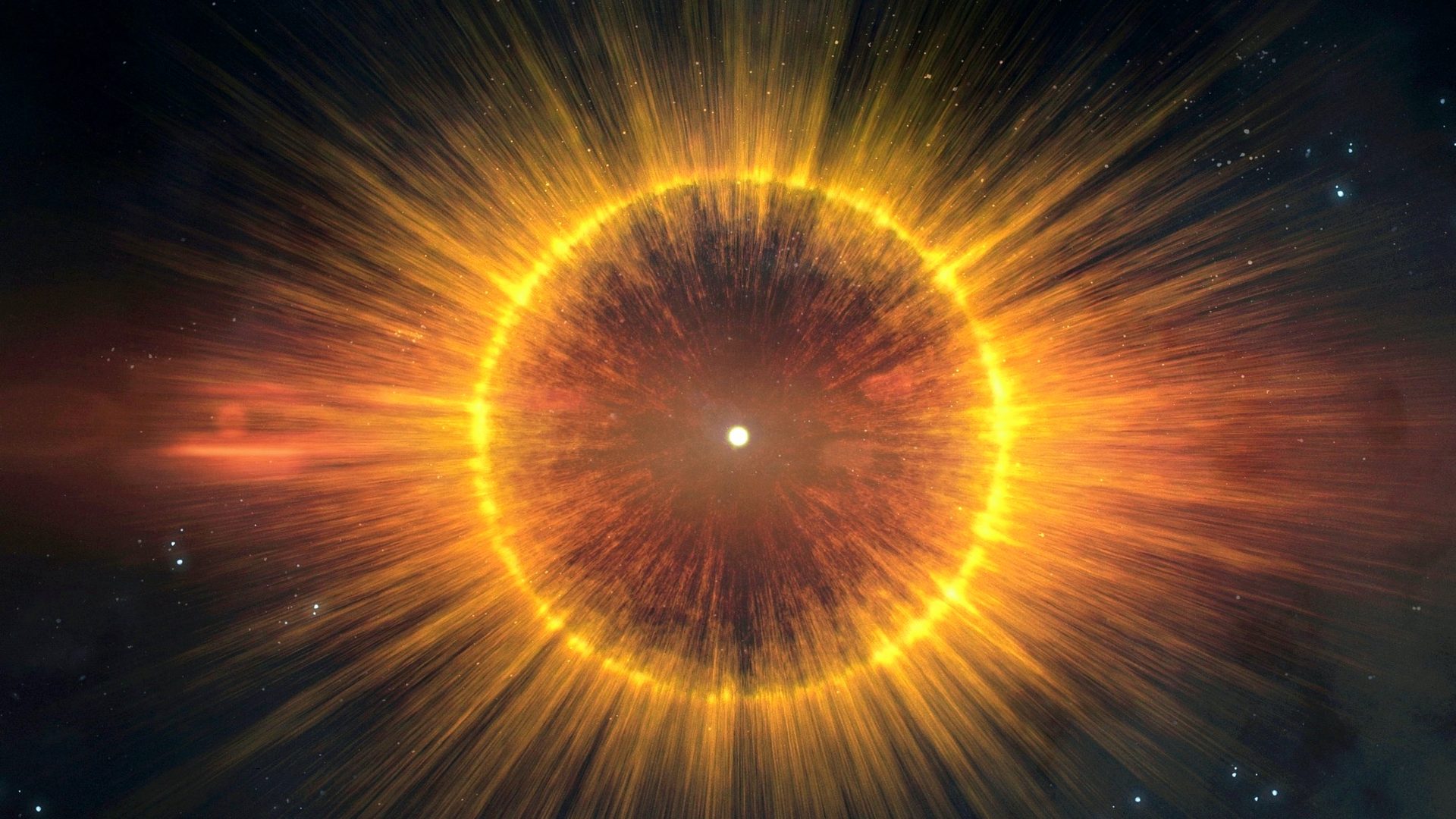
THE NEUTRINO IS TOO WEAK? THEN PLEASE EXPLAIN THAT TO A STAR.
For decades, one of the most convenient arguments against taking neutrinos seriously as part of an energy-conversion concept sounded almost irresistible: Neutrinos barely interact with matter. New astrophysical research shows just how consequential neutrino physics can become — in the collapse of a massive star, changes in neutrino behaviour can decide whether the explosion succeeds or the star collapses into a black hole.
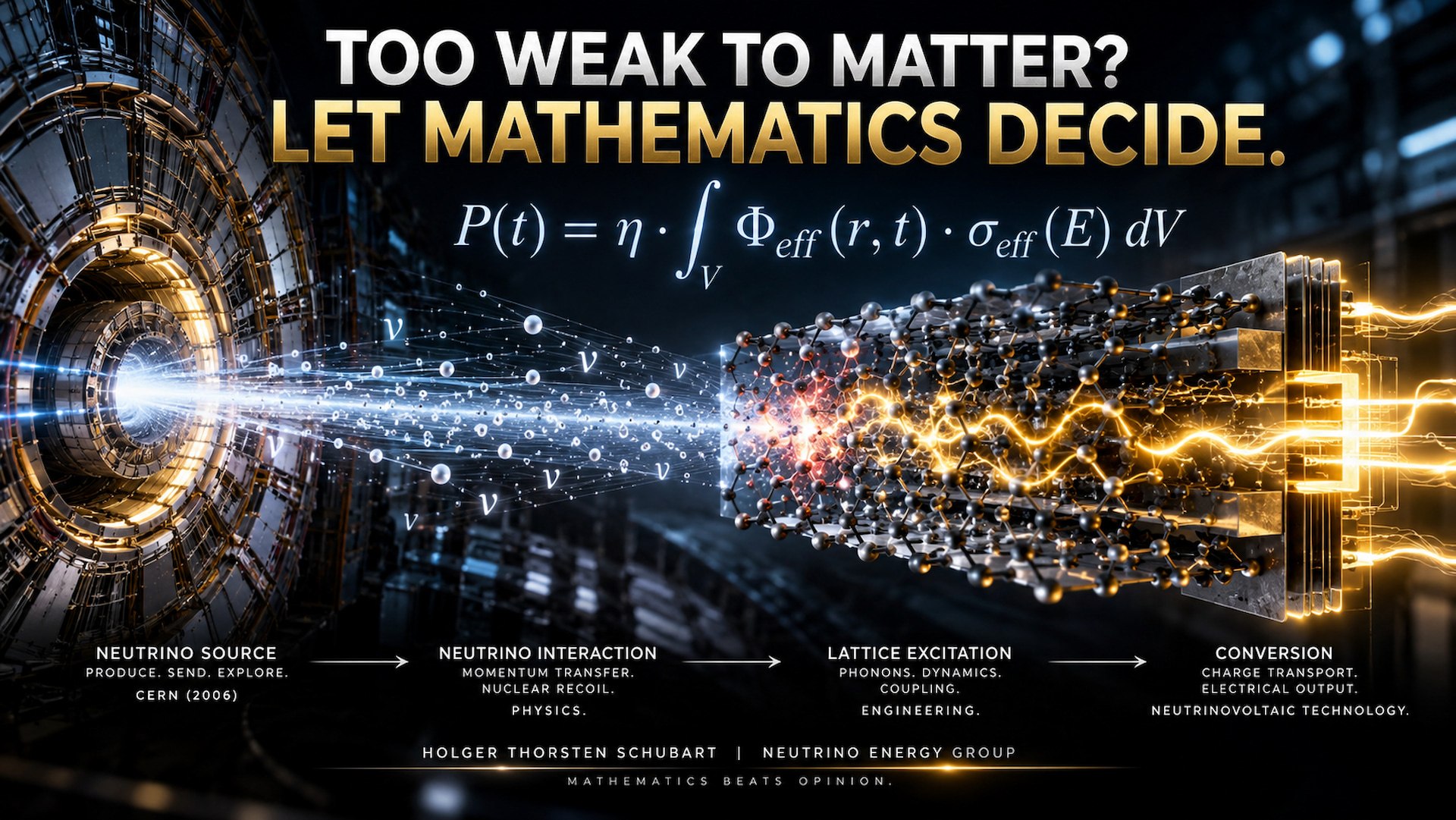
CERN WAS RIGHT ABOUT THE NEUTRINO. PERHAPS WE WERE WRONG ABOUT WHAT TO DO WITH IT.
In 2006, CERN wrote: “Neutrinos, on your marks…!” Twenty years later, German mathematician Holger Thorsten Schubart would like to add something to that starting signal: Stop treating the neutrino only as something to detect. Start asking what it can make matter do.
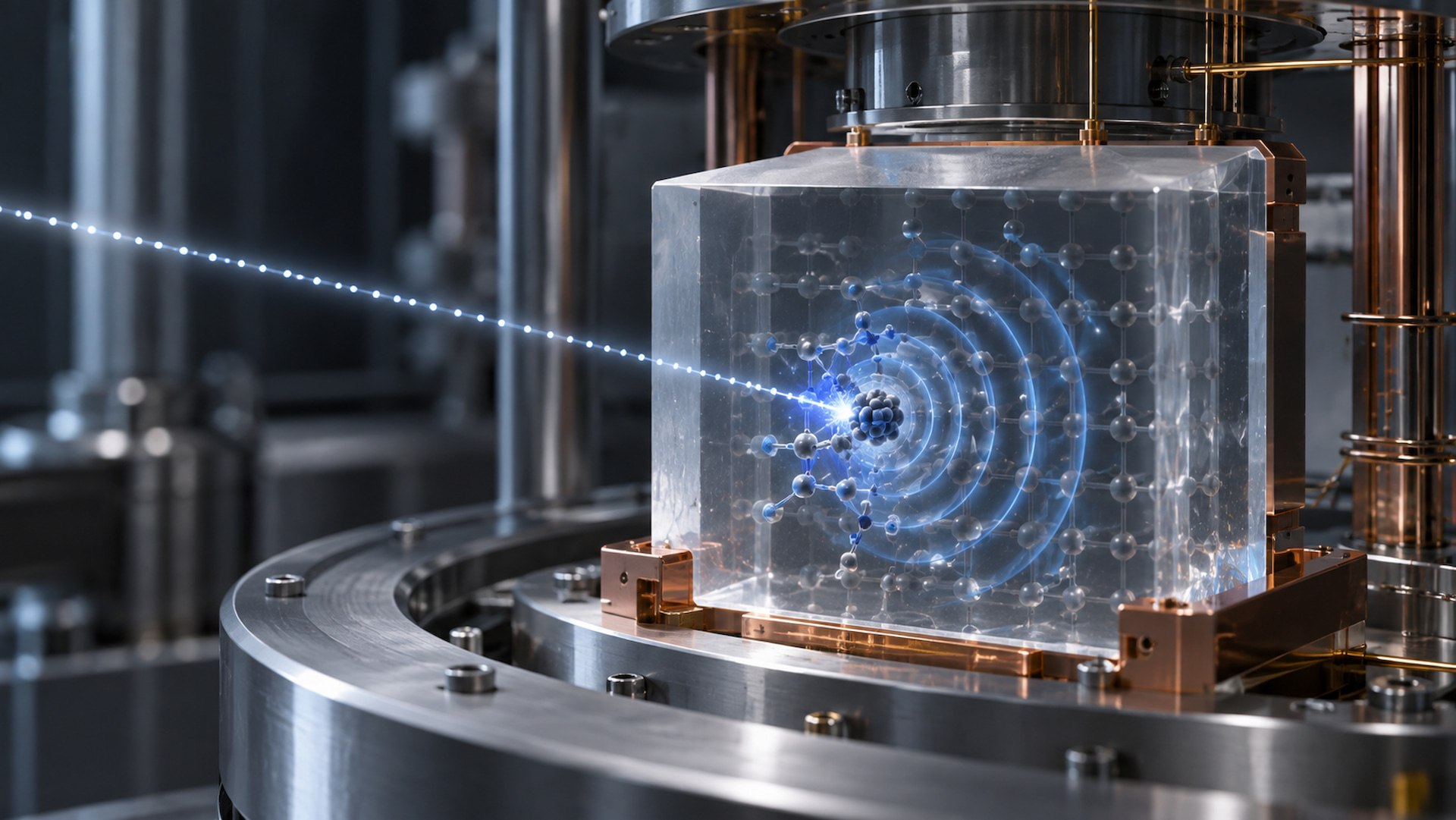
What If We Have Been Underestimating the Neutrino?
For decades, the neutrino has been introduced with almost ritual consistency: Tiny. Elusive. Weakly interacting. Almost impossible to catch. Then nature returns a number. The DEAP-3600 Collaboration has now reported the first evidence for the absorption of solar ⁸B electron neutrinos on argon-40.
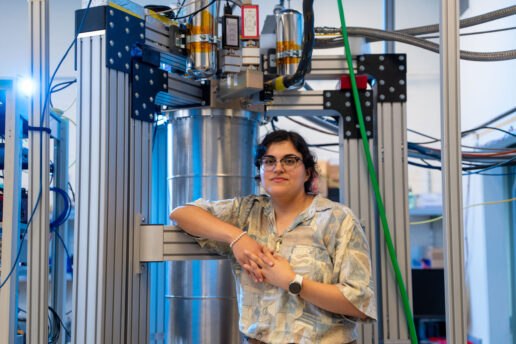
Scattering neutrinos to probe the fundamental laws of the universe
Thank You, MIT. The Crystal Has Answered. Sometimes science delivers an answer so clearly that the next question can finally begin. At the RICOCHET experiment in Grenoble, an international collaboration — with researchers from MIT — is studying what happens when an antineutrino interacts with an atomic nucleus.
What Happens When a Solar Neutrino Hits Matter?
The Sun is 150 million kilometres away. And yet, something born deep inside it can make a nucleus on Earth move. Not metaphorically. Not theoretically. Measurably. LUX-ZEPLIN has now reported 4.5-sigma evidence for coherent elastic neutrino–nucleus scattering from solar ⁸B neutrinos. A particle crosses the darkness between Sun and Earth. It enters matter almost unnoticed. Then, in a moment smaller than anything human senses can perceive, a nucleus recoils. That recoil is real. That recoil carries momentum. And today, science can measure it.
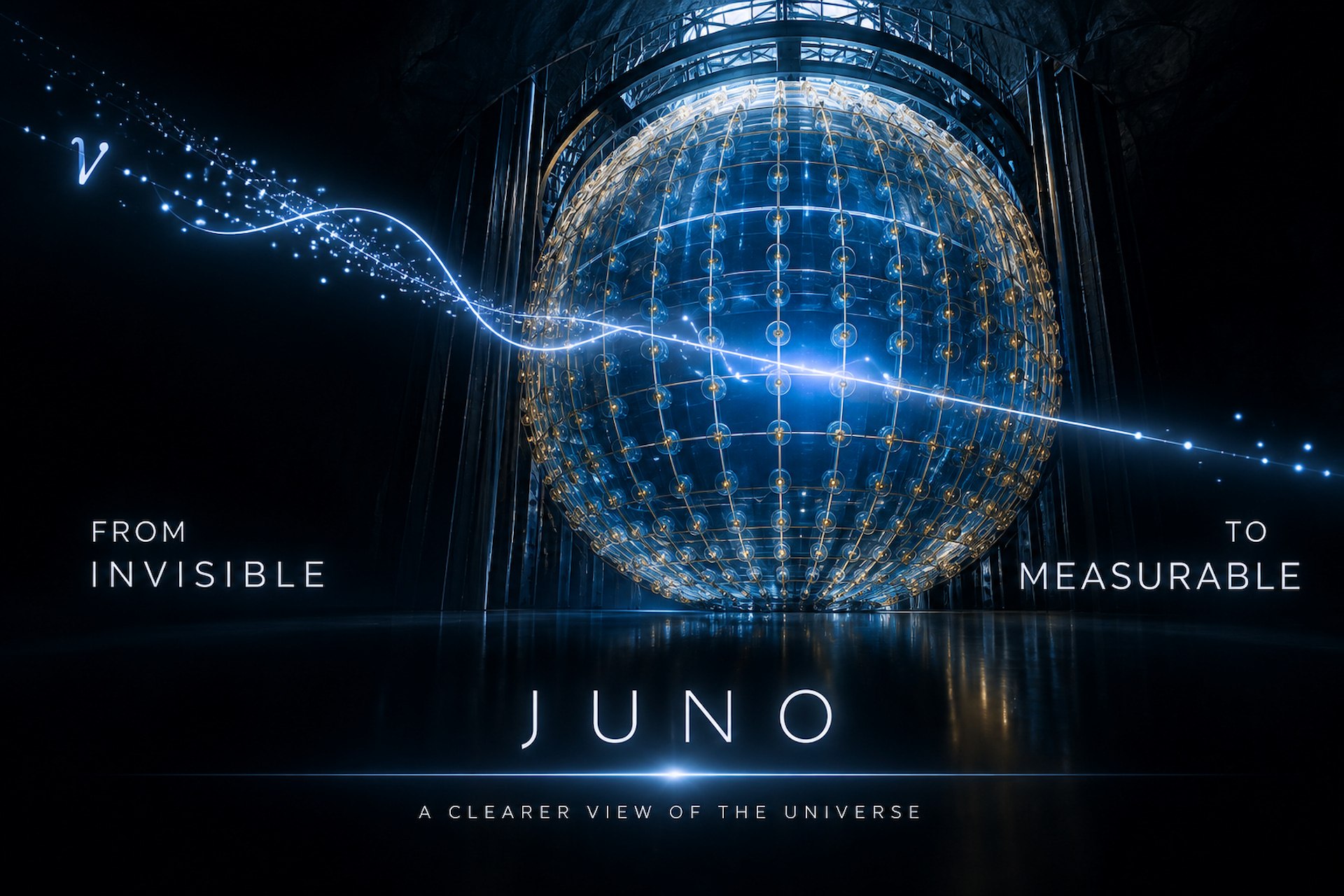
From Elusive Signal to Precision Measurement
For decades, neutrinos were the ghosts of physics: everywhere, yet extraordinarily difficult to measure. Now JUNO is changing the scale of precision. And that should make us think. Weak interaction does not mean no interaction. Difficult to measure does not mean irrelevant. And what science cannot quantify precisely today may look very different tomorrow.

From Sensor to Grid
A sensor, a household appliance, a building, a village, a city grid. What changes when energy supply is examined across all seven scales rather than from the power station outward? The path leads through embedded generation, modular systems, microgrids and existing infrastructure, with one recurring question: which energy must travel to the consumer, and which could begin where it is needed?
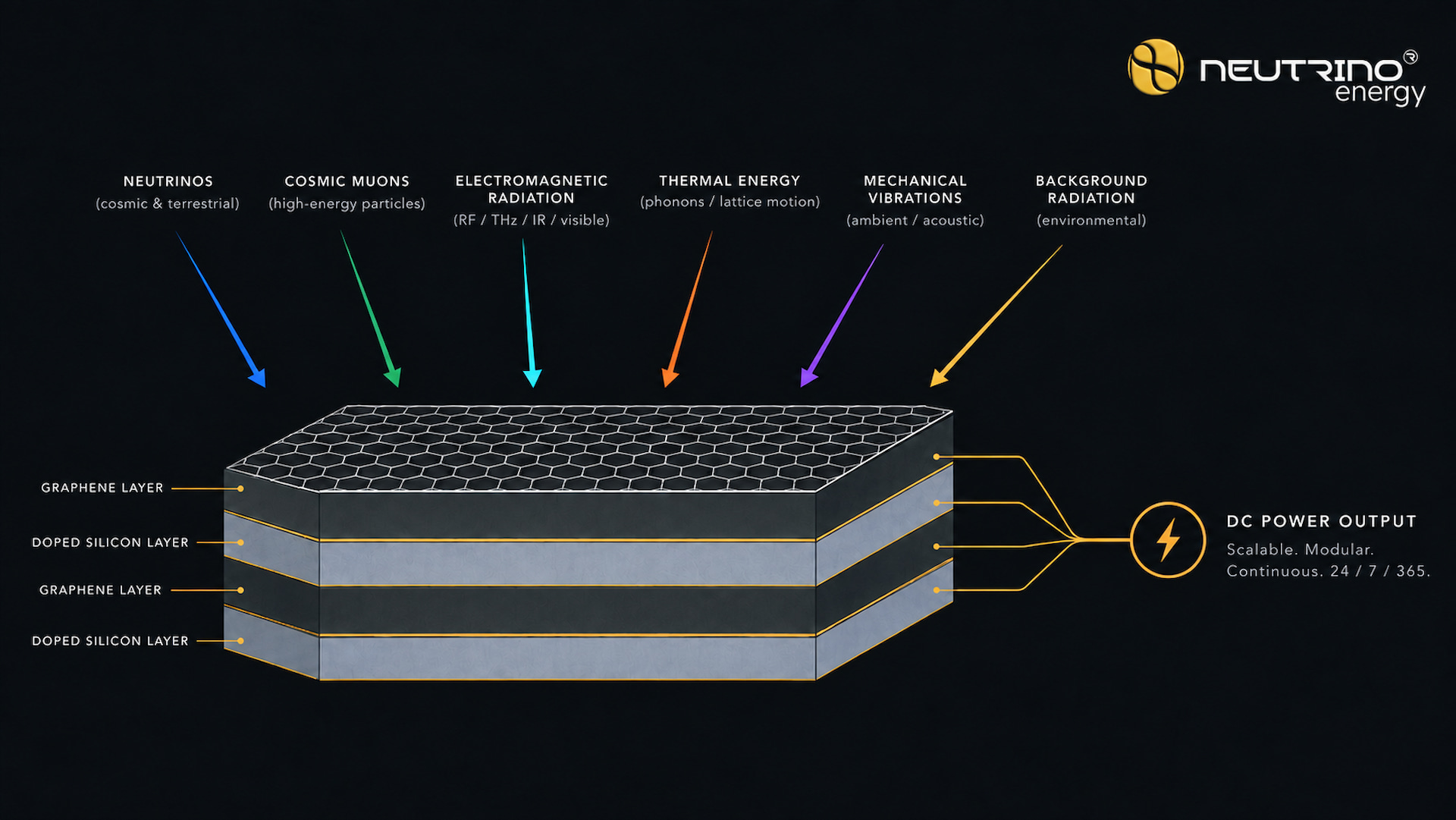
Mathematics Beats Opinion: A Statement to the Global Scientific Community
What happens when a disputed scientific proposition is stripped of belief, authority, headlines and interpretation, leaving only quantities that can be measured? Energy entering a system. Interaction channels. Material coupling. Electrical output. Losses. Reproducibility. The standard is deliberately demanding: define, measure, isolate, calculate, reproduce. Whether the mathematics ultimately supports, limits or challenges Neutrinovoltaic claims is a question for controlled experiments and independent verification.

The Energy Transition Was Never Going to Be One Thing, and That's Exactly Why It Can Still Work
What happens when global energy demand grows unevenly, infrastructure develops at different speeds, and no single technology fits every region? From rising demand across emerging economies to storage, transmission, conventional energy, renewables, and new approaches to distributed generation, the transition increasingly looks less like one road and more like a network of paths shaped by local realities.

The Silent Tax Everyone Pays: What a Home's Idle Hours Actually Cost
At three in the morning, almost everything in a house appears to be off. The electricity meter disagrees. Behind that quiet moment lies a larger question about standby demand, grid capacity, continuous consumption, and the infrastructure required to support peaks that occur only occasionally. What changes when we start looking at household electricity through its quietest hours rather than its busiest ones?
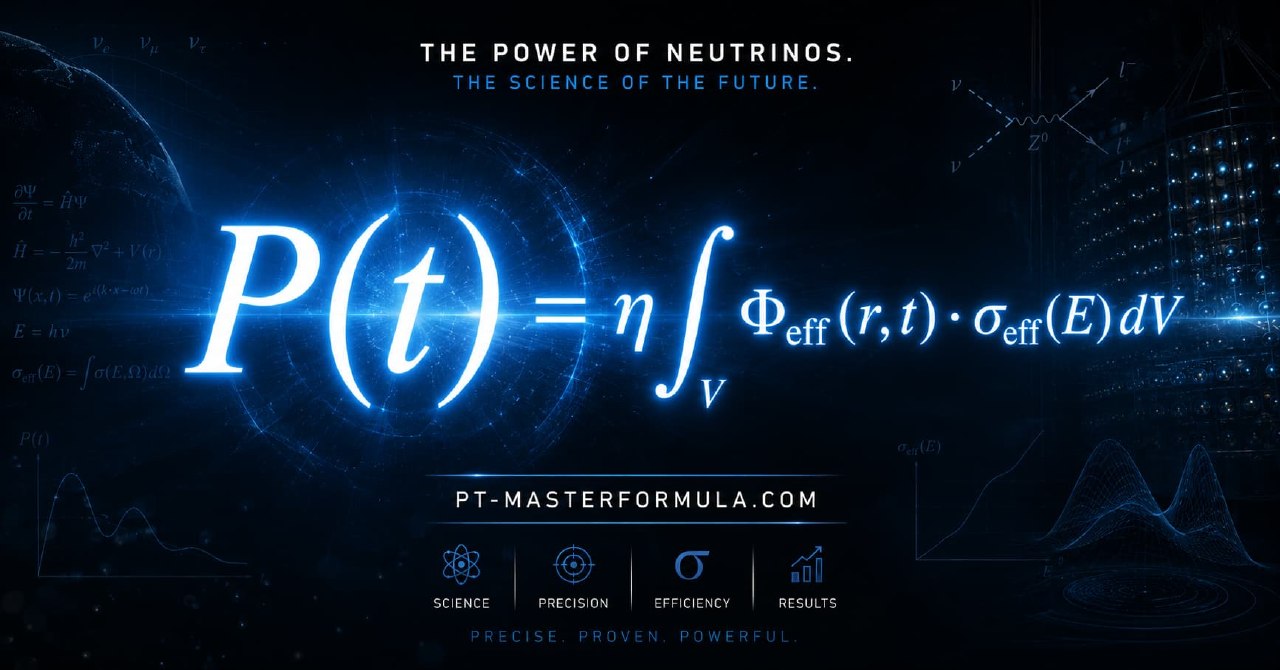
The Schubart Master Formula: From Claim to Calculation
There comes a point when opinion ends. When belief becomes irrelevant. When debate is replaced by calculation. When a technology no longer asks to be imagined — but to be measured. That point has an equation. One formula. One canonical notation. One unmistakable reference. No noise. No ambiguity. No escape into opinion. Mathematics Beats Opinion. The Schubart Master Formula is now anchored.
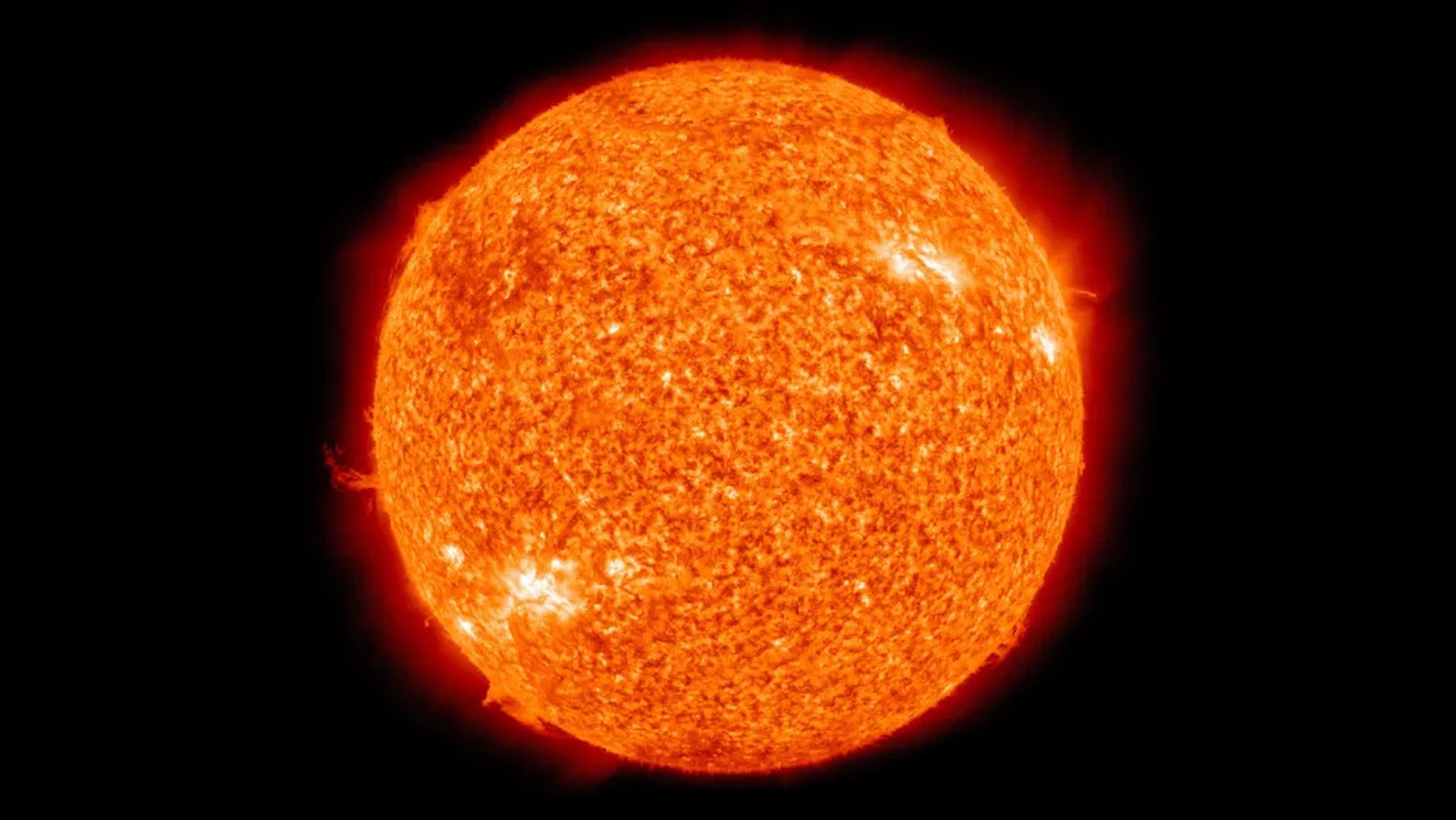
17 keV. And suddenly, the "almost impossible to detect" becomes measurable.
For decades, neutrinos have been introduced with essentially the same sentence: they pass through matter almost without interacting. True. But "almost" is a remarkably important word in physics. XENONnT has now pushed real-time solar-neutrino spectroscopy down to energies of about 17 keV — opening an experimental window that, until recently, remained beyond reach.
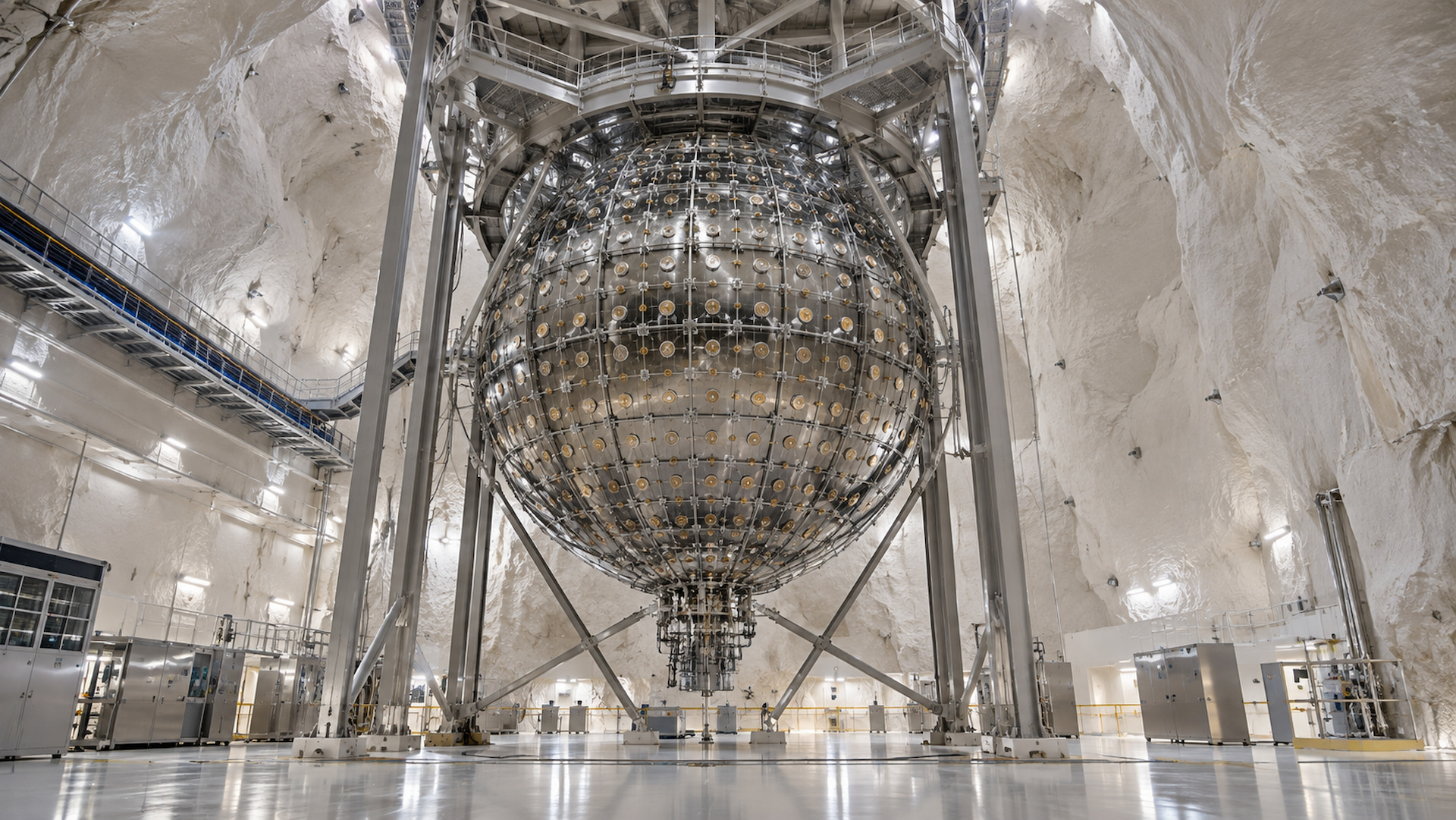
When the Invisible Becomes Measurable
For decades, neutrinos represented one of the great challenges of experimental physics: everywhere around us, yet extraordinarily difficult to observe. Today, laboratories such as SNOLAB are pushing the boundaries of our ability to detect and understand some of nature's weakest interactions. What was once almost entirely invisible is becoming increasingly accessible to measurement, mathematics and advanced detector technology.
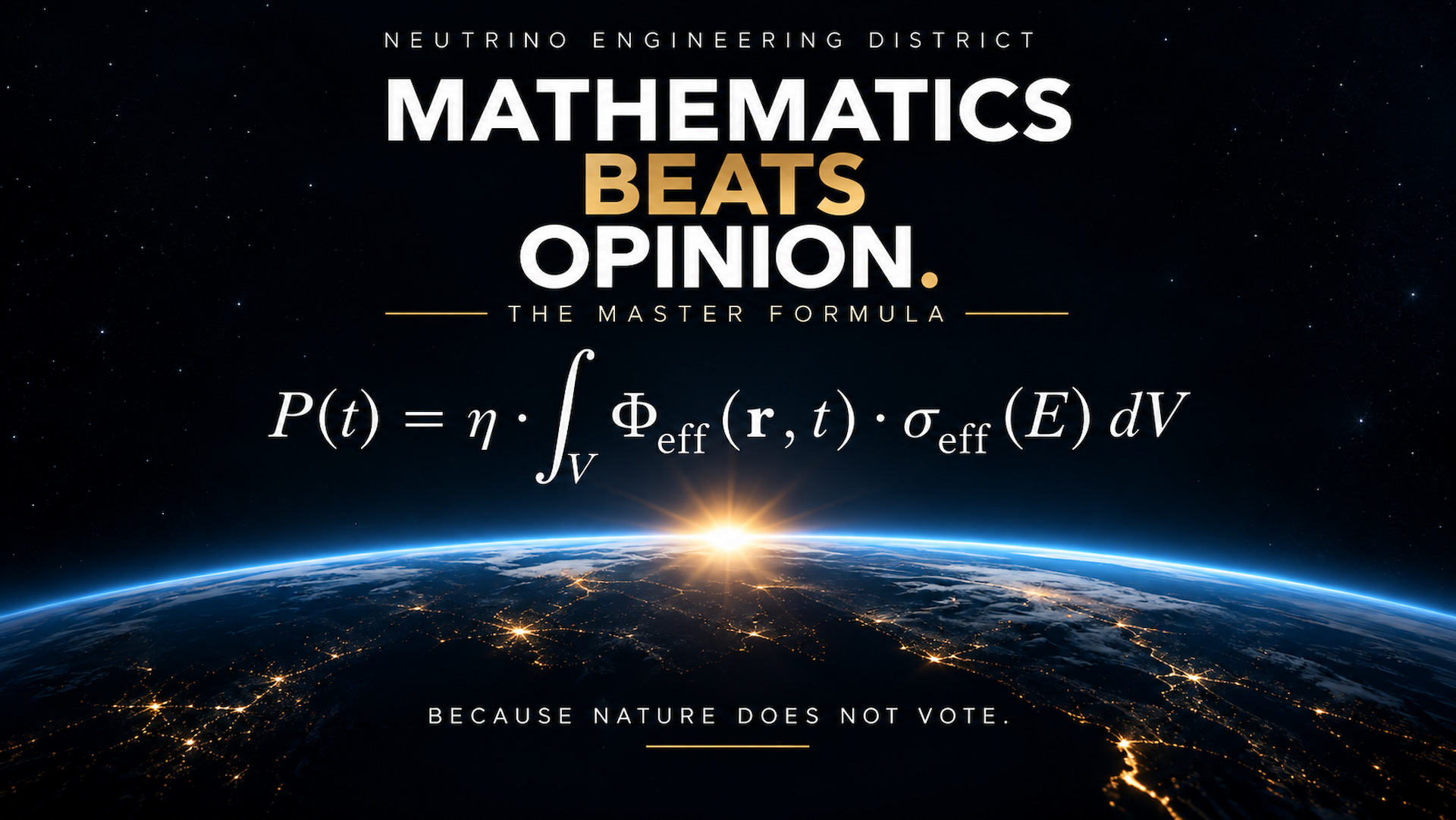
Mathematics Beats Opinion
What happens when an energy claim is stripped of reputation, rhetoric, and confidence, then reduced to variables, assumptions, boundary conditions, measurements, and an equation that can fail? The Master Formula is placed under that standard, alongside a wider question about how artificial intelligence can be used to search for contradictions rather than agreement. Calculation, simulation, measurement, and engineering are deliberately kept separate.
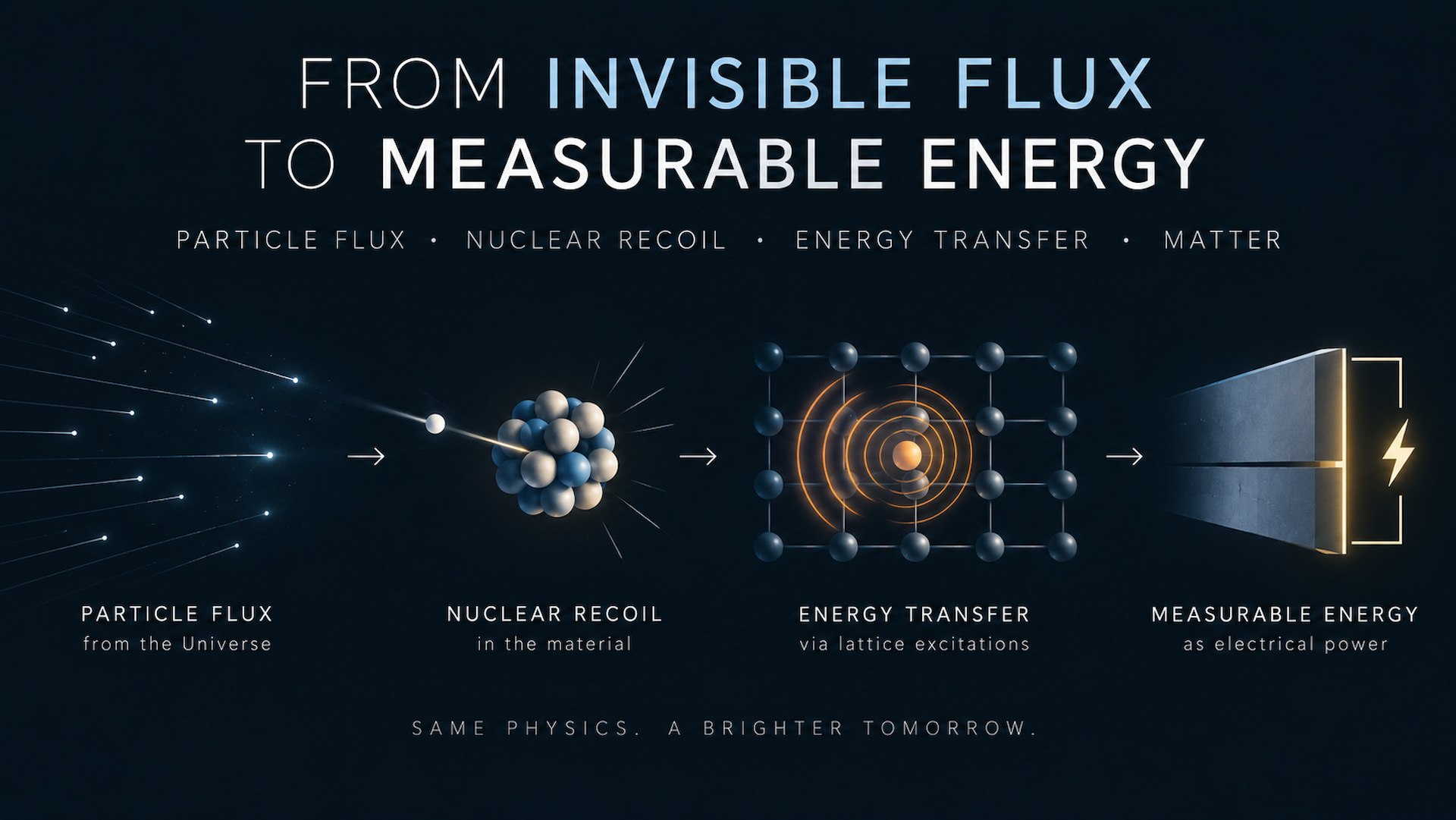
Solar Neutrino Constraints on Inelastic Dark Matter Scattering in Light of Recent LUX-ZEPLIN Observations
A single 248 keV nuclear recoil in LUX-ZEPLIN leads far beyond an underground xenon detector. Inelastic dark matter that can scatter with nuclei on Earth may also be captured inside the Sun, where subsequent annihilation could leave a very different signature: high-energy neutrinos reaching IceCube. Connecting these two experimental environments creates an unusually broad test of dark matter masses, mass splittings, nuclear interactions, and possible annihilation channels.

The Grid Is Becoming the Scarce Resource
AI data centers, electrification, copper demand, long-term power agreements and new capacity mechanisms may look like separate developments. Put them on the same map, however, and a deeper infrastructure question emerges: what happens when electricity demand can grow faster than the systems built to deliver it? Perhaps the next energy debate is not only about how electricity is generated, but also how far it must travel before it is used.
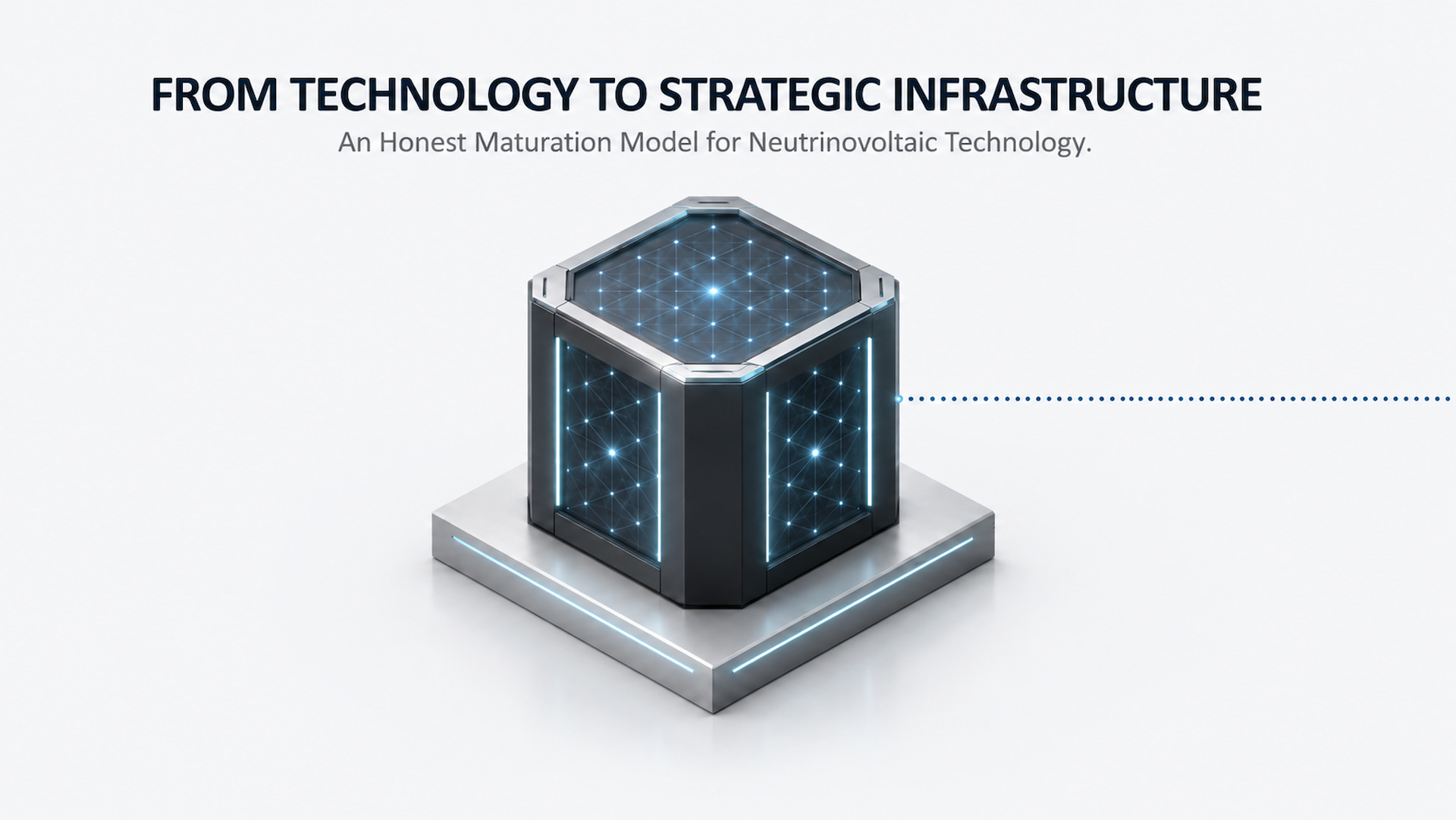
From Technology to Strategic Infrastructure
What separates technological possibility from infrastructure that societies can actually rely on? Seven stages trace that distance, from defined mechanisms and evidence to reproducibility, industrial capacity, connected research networks, and strategic infrastructure. The framework is deliberately uneven: some foundations are established, others remain under examination, and the final stage is explicitly a destination rather than a claim of arrival.