Neutrino Power Cube
5–6 kW of clean energy, running day and night - no fuel, no grid, no emissions. Discover the generator that runs on what's already here.
Design targets - independent verification pending
- Net output
- 5–6 kW continuous
- Output voltages
- 220 V / 380 V AC + DC for sensitive equipment
- Dimensions
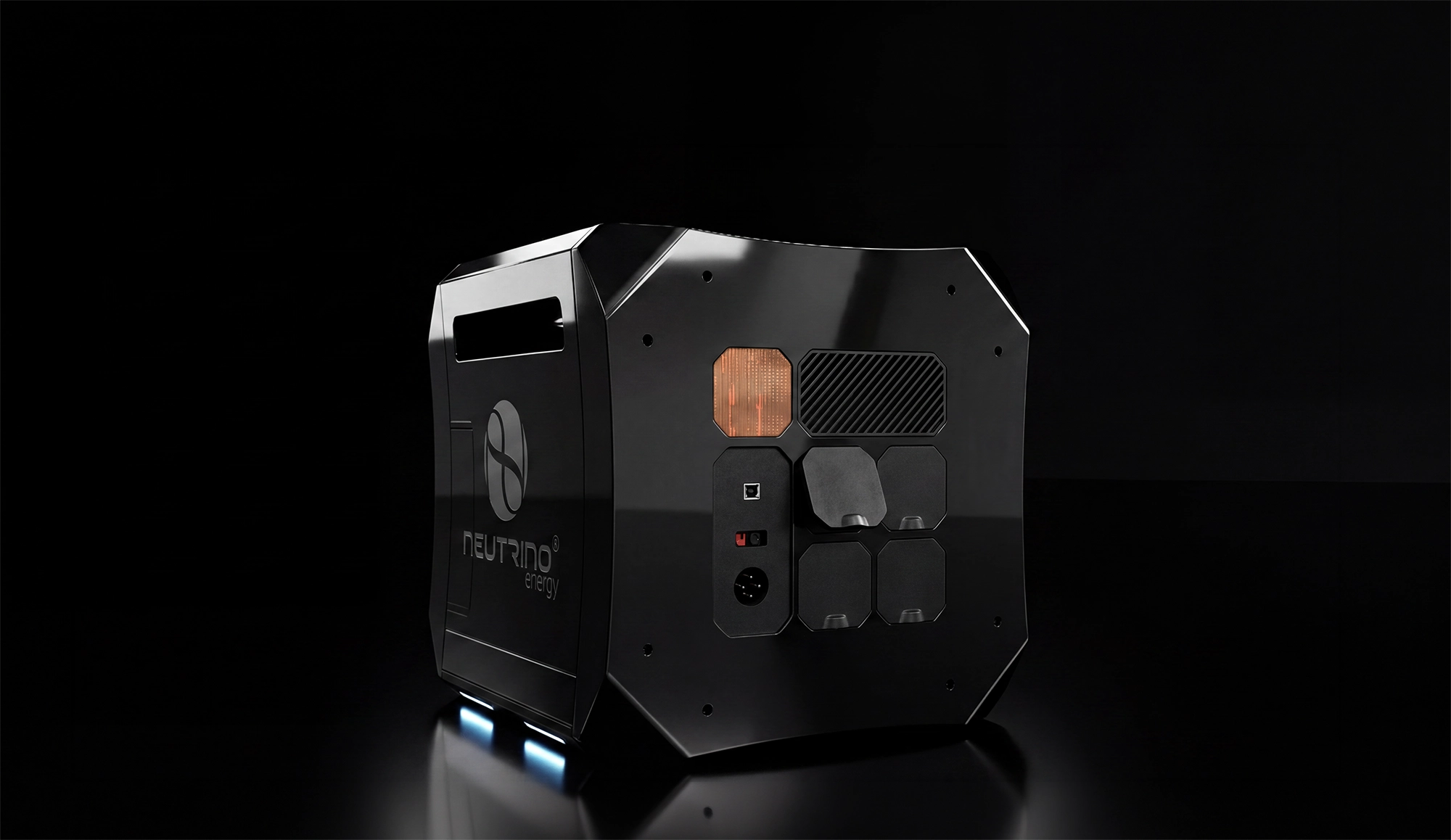
- 800 × 400 × 600 mm two-part cabinet
- Weight
- ≈ 50 kg
- Fuel required
- None ambient flux conversion
- Grid connection
- Not required standalone operation
- Emissions
- Zero no combustion, no waste
- Operating conditions
- 24/7, any location independent of weather and sunlight
- Maintenance
- Minimal - no moving parts
How It Works
The Neutrino Power Cube applies the 6-stage conversion chain described in the scientific overview to a practical, self-contained device. Environmental flux - neutrinos, cosmic muons, electromagnetic radiation, and thermal fluctuations - enters the multilayer graphene-silicon converter, where it is transformed into stable DC electricity. Often described simply as an energy cube or electricity cube, the unit is designed as a compact two-part cabinet that requires no fuel and no grid connection.
The converter consists of 12 alternating layers of doped graphene and silicon, each contributing to cumulative voltage buildup through asymmetric rectification. A single 200 × 300 mm generation plate delivers approximately 1.5 V and 2 A under normal conditions (20 °C). The cabinet houses the power-generation modules in one compartment and inverters plus control systems in the other; power conditioning circuitry smooths the output for household or commercial use.
The modular design scales: around 200,000 Power Cubes correspond to roughly 1,000 MW - the output of a mid-sized nuclear power station. A companion unit, the Neutrino Life Cube, combines a smaller 1–1.5 kW generator with climate control and an air-to-water purification system producing up to 25 litres of clean water per day, aimed at disaster zones and off-grid communities.
Neutrino Power Cube in Action
Potential Applications
If design targets are met, the Neutrino Power Cube could provide decentralized energy in scenarios where grid infrastructure is unavailable, unreliable, or undesirable:
- Off-grid residential
- Homes in remote areas without grid access
- Disaster relief
- Emergency power without fuel logistics
- Developing regions
- Energy access without infrastructure investment
- IoT and sensors
- Persistent power for autonomous monitoring systems