10 Billion Times the Energy of Solar Neutrinos. And Humanity Is Still Only Beginning to Understand the Invisible.
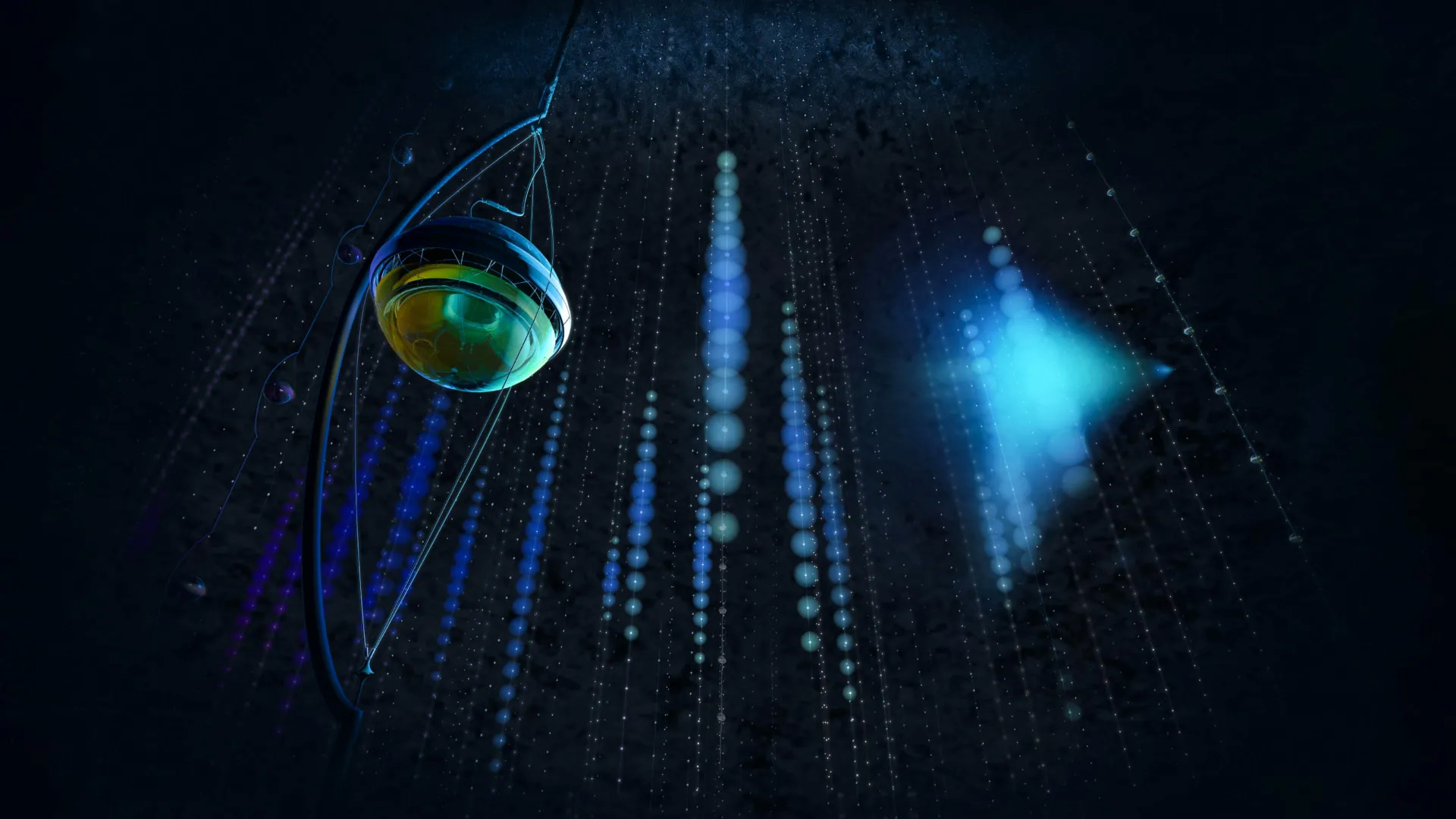
For decades, neutrinos were treated as ghost particles — almost impossible to catch, extraordinarily difficult to measure, and largely invisible to everyday life. Now IceCube is observing cosmic neutrinos with energies billions of times greater than those of typical solar neutrinos. The universe has been sending us signals all along. Perhaps the real question is no longer what exists beyond our understanding. Perhaps it is why we have been so slow to challenge the limits of that understanding.
While the IceCube Neutrino Observatory explores the most extreme processes in the cosmos, mathematician and Neutrino Energy Group founder Holger-Thorsten Schubart is asking a different, equally provocative question: What if the next revolution in energy doesn’t begin with finding another fuel — but with learning to convert energy already present in our environment?
That question drives the research behind Neutrinovoltaic Technology, graphene-silicon nanomaterials, the Schubart Master Formula and the development of the Neutrino Power Cube. Not by claiming that neutrinos alone can power our civilization. Not by confusing cosmic particle detection with electricity generation. But by investigating whether multiple ambient energy channels, interacting within advanced materials and open non-equilibrium systems, can be engineered into useful electrical output.
The challenge is enormous. Independent validation remains essential. But history has rarely rewarded humanity for assuming that today’s technological boundaries are permanent. IceCube is teaching us how to observe the invisible universe. Neutrino Energy Group is asking whether the invisible and overlooked energy around us can become part of humanity’s energy future.
And perhaps the most dangerous sentence in science has never been “What if?” Perhaps it has always been: “That will never be possible.”