Pi Car
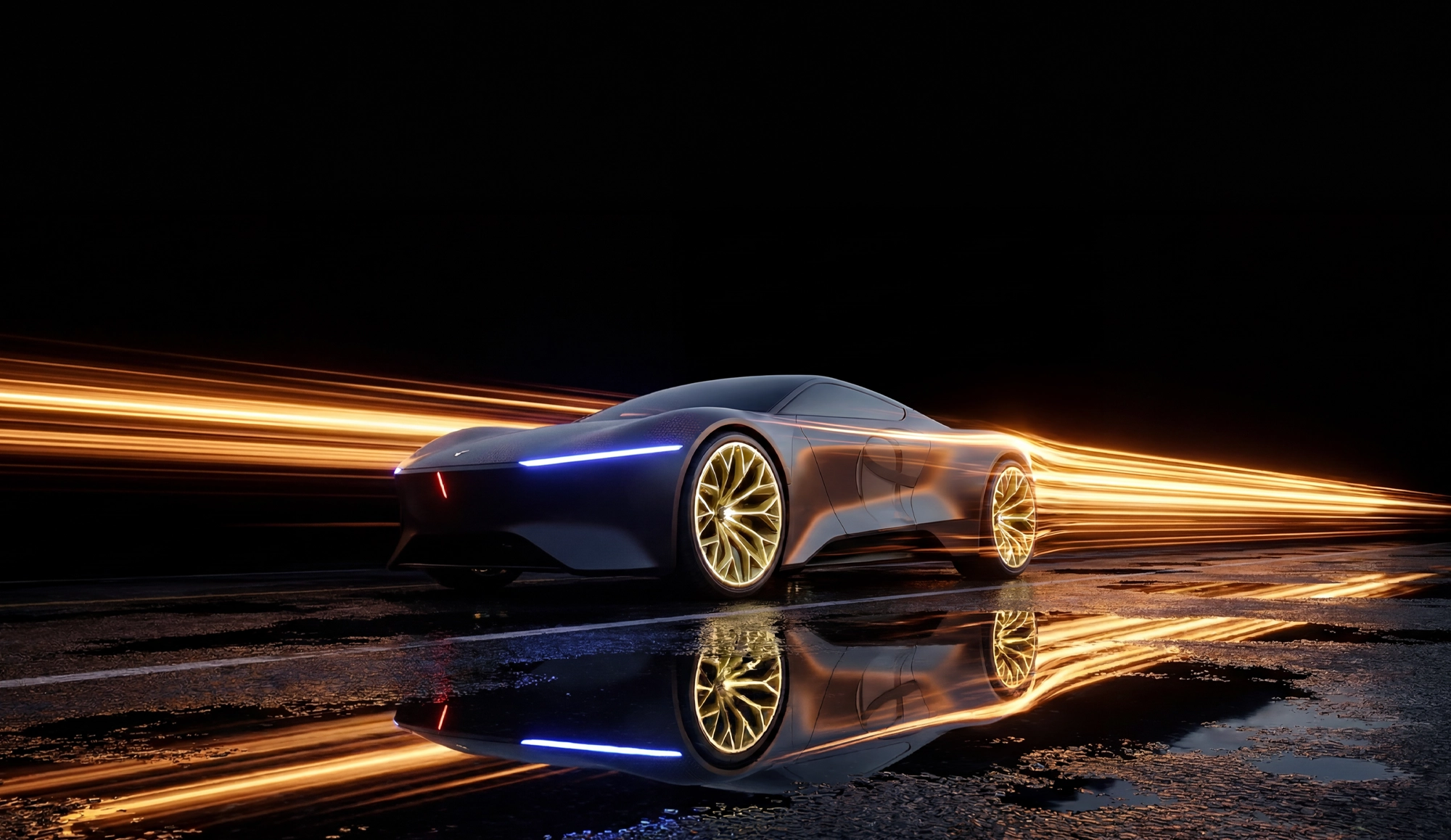
The Pi Car is an EV concept with neutrinovoltaic body panels that harvest energy nonstop - while driving and parked - cutting reliance on charging stations.
Design targets - independent verification pending
- Power source
- Neutrinovoltaic body panels concept
- Charging
- Continuous ambient harvesting design target
- Range gain
- Up to 100 km per hour parked design target, typical conditions
- Emissions
- Zero design target
- External charging
- Reduced dependency design target
- Operating hours
- 24/7 harvesting design target - including standstill
- Development partners
- C-MET Pune, Simplior, SPEL Memorandum of Cooperation
The Concept
The Pi Car envisions a vehicle whose body panels are not just structural but functional - integrating neutrinovoltaic conversion material directly into the exterior surface. This would allow continuous, passive energy harvesting from environmental flux, supplementing the onboard battery and reducing dependence on external charging infrastructure.
Unlike solar-powered vehicle concepts, the neutrinovoltaic approach is not limited to visible light. The conversion material responds to multiple environmental channels - including radiation that penetrates solid structures - meaning the system operates at night, underground, and in all weather conditions. Under typical conditions, the design target is for an hour of standstill outdoors to provide up to 100 kilometres of range.
The project was born from a Memorandum of Cooperation with leading institutes such as C-MET Pune in India, supported by Simplior Technologies, SPEL Technologies, and additional global partners. It is part of the broader Pi Mobility initiative, which also spans Pi Fly (aviation) and Nautic Pi (maritime).
Pi Car in Action
Technical Basis
The Pi Car concept builds on the same 6-stage conversion chain as the Neutrino Power Cube, adapted for thin-film integration into curved vehicle surfaces. The technical challenges include:
- Achieving sufficient power density in thin-film format
- Maintaining conversion efficiency across curved geometries
- Integration with existing EV battery management systems
- Durability under automotive operating conditions