The World Applauds. We Can Already Hear the Next Symphony.
The Nobel Prize in Physics has brought "high-energy neutrinos" into the global spotlight — creating an extraordinary moment for a field this company's name has united for years. This week the Nobel committee gave neutrino astrophysics its moment, a framework for keeping many intelligences honest, and a reactor study on elastic scattering joined it — three very different documents, one shared subject: how carefully this field checks its own claims.
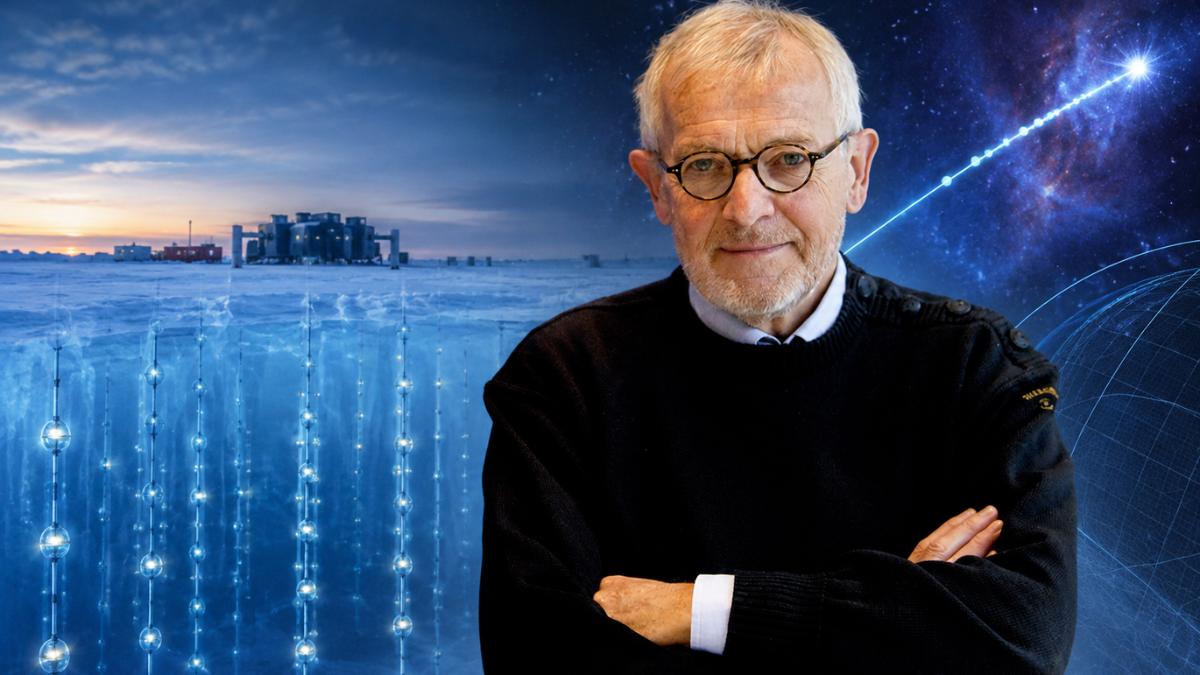
Our CEO's congratulations to Francis Halzen on the 2026 Nobel Prize in Physics.
From Holger Thorsten Schubart
The World Applauds. We Can Already Hear the Next Symphony.
Our CEO's congratulations to Francis Halzen on the 2026 Nobel Prize in Physics, awarded for his decisive contributions to the IceCube Neutrino Observatory and the discovery of high-energy astrophysical neutrinos.
Halzen spent decades building the case for a neutrino telescope buried in a cubic kilometre of Antarctic ice - a project many considered too strange to work. IceCube now routinely catches high-energy neutrinos arriving from blazars and other astrophysical sources billions of light-years away, numbers no other instrument can reach. This week the Nobel committee confirmed what the data already showed: patient, unglamorous detection work on a famously uncooperative particle can change what physics knows about the universe.
Multimessenger Astronomy — IceCube's Nobel-winning work is also the textbook case for multimessenger astronomy: combining neutrinos with light and gravitational waves to triangulate events no single signal could explain alone. Our reference page walks through how that combination works.
Cosmic Rays — The high-energy astrophysical neutrinos IceCube detects are closely tied to cosmic rays - understanding one has always meant understanding the other. Our overview covers where cosmic rays come from and what they tell us.
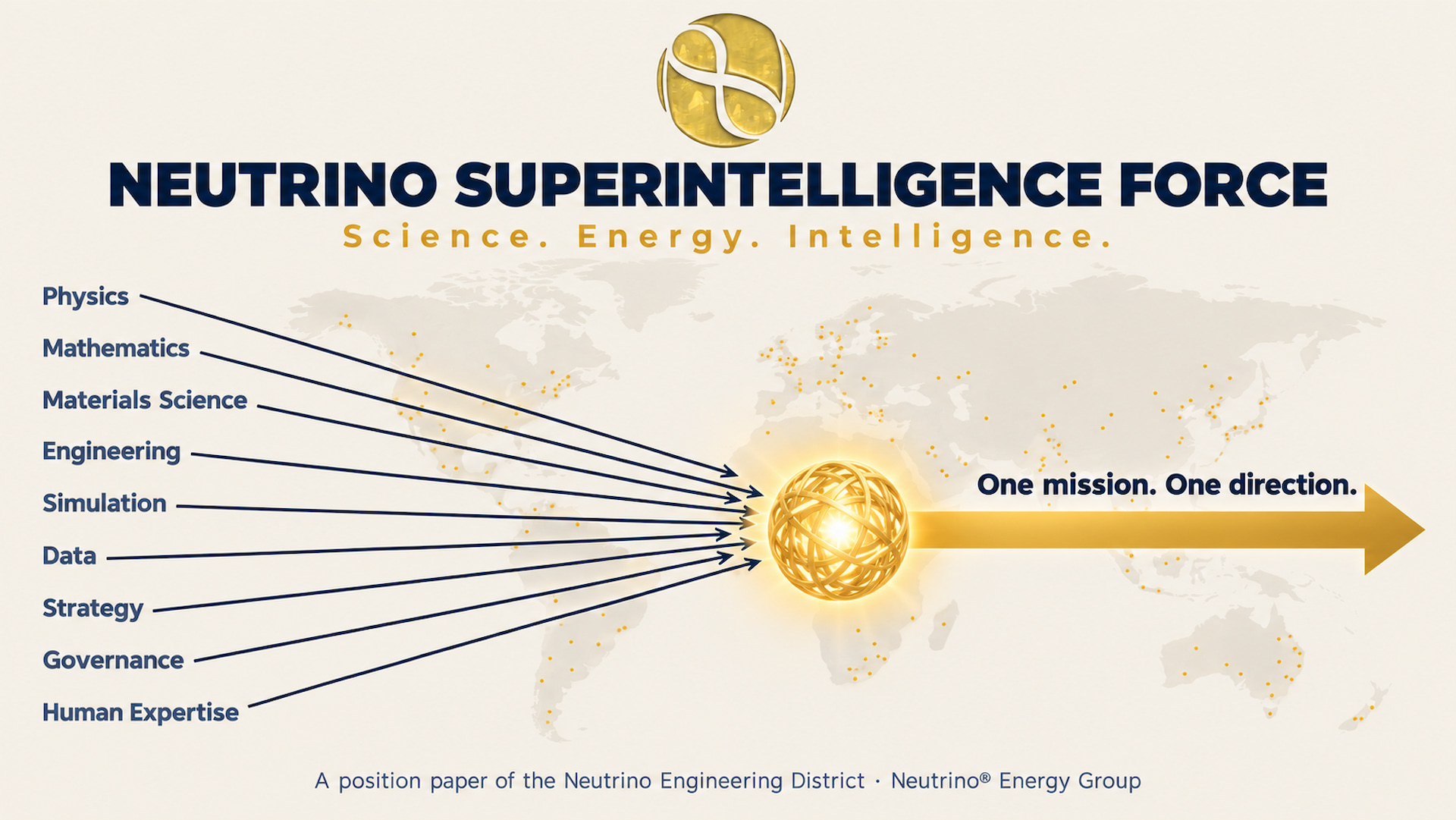
A Nobel Prize, a framework for keeping intelligent systems honest, and a reactor study on elastic scattering look like three unrelated documents. They share one habit: none of them asks to be believed, all of them ask to be checked. Halzen's prize rests on a decade of reproduced, astrophysical-scale detections. The Superintelligence Force makes checking itself the design, not an afterthought. And the CLOUD/TAO/DANSS study exists only to calculate, precisely, what can and cannot yet be concluded. That is the standard neutrinovoltaic claims have to clear too - not applause first, measurement first.
Our drive comes from the conviction that economy and ecology belong together — and that scientific progress must serve people's wellbeing. We have pursued this research path on our own initiative, independent of political interests, carried by people who believe in a better future and are willing to take responsibility for it.
Money, in this, is a tool: it enables research, creates room to act, and helps turn ideas into results that can be checked. At a task of this scale, every milestone reached also opens new possibilities — which is why every euro that actually flows into this work counts.
Whoever helps shape this path supports a larger social idea: advancing economic progress and ecological responsibility together. We don't accept direct donations; our PIority community offers access to our digital world and to the people who carry this vision forward. Especially for those who missed or hesitated on NET8's Pre-ICO, this moment can be the occasion to get familiar with our next chapters early — and consciously decide whether to join this time, or simply put themselves in the right position now.