A particle carrying no electric charge interacts with matter – and leaves behind an electrically measurable signature. What might initially appear to be a physical paradox has become the subject of some of the most precise experimental investigations in modern particle physics.
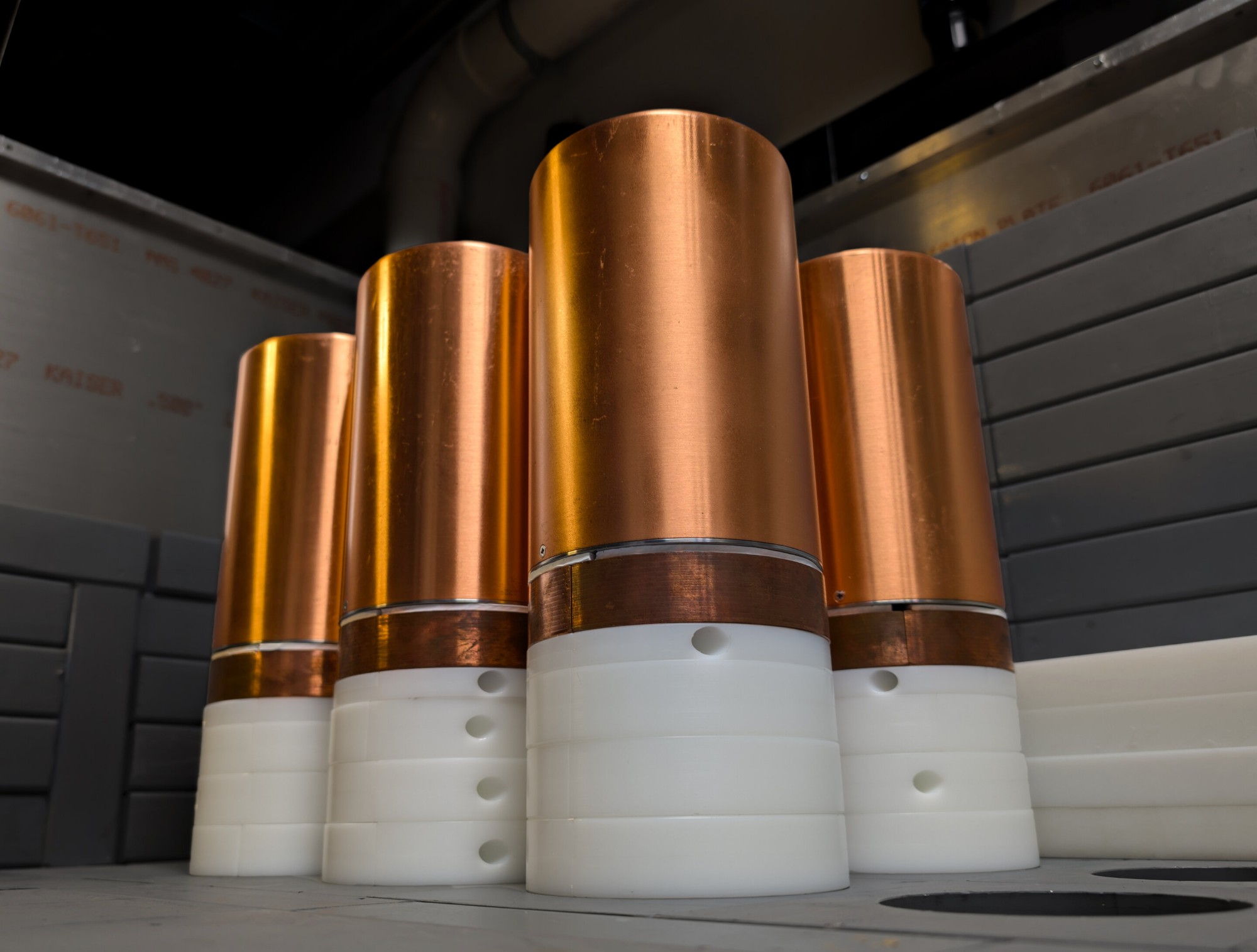
The latest findings from the international COHERENT Collaboration, published in Physical Review Letters, mark another remarkable scientific advance. Using high-purity germanium semiconductors, researchers have measured coherent elastic neutrino–nucleus scattering (CEνNS) with unprecedented precision. The nuclear recoil resulting from this interaction produces measurable electrical charge.
What makes this development particularly compelling is not merely the increasing precision of particle physics, but also the growing importance of materials science. Between a physical event and its electrical manifestation lies one decisive factor: the material itself.
It is precisely at this intersection that the Neutrino Energy Group, under the scientific and technological leadership of mathematician Holger Thorsten Schubart, has been pursuing its own research and development approach for years. Neutrinovoltaic Technology, the Schubart Master Formula, and the development of nanoscale graphene–silicon material systems address a broader scientific question: How can different energy-transfer mechanisms be captured, combined, and ultimately harnessed through intelligently engineered material architectures?
While the international fundamental research community continues to refine its measurement techniques, the Neutrino Engineering District is working on the materials science and engineering foundations of a new generation of decentralised energy technologies, including the Neutrino Power Cube and the Pi-Car concept.
Fundamental research and technological development serve distinct purposes. Yet it is precisely where their insights converge that some of the most compelling opportunities emerge.
Perhaps one day, looking back on this chapter in the history of physics, we will realise that the greatest surprise was not the existence of neutrinos themselves, but the extraordinary range of scientific and technological possibilities revealed through their interactions with matter.
The following article, published by Phys.org, therefore deserves particular attention – not only from particle physicists, but also from materials scientists, nanotechnologists, engineers, and all those thinking beyond the conventional boundaries of our energy future.